
About
Engineering Faculty
Bio
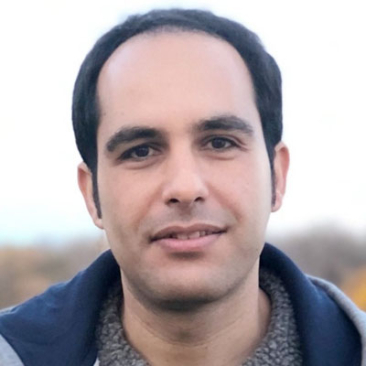
Dr. Hamid Rajab has five years of experience teaching and mentoring diverse and first-generation students. He teaches undergraduate and graduate level courses including Computer Organization, Programming Fundamentals, and introductory systems-level computing, emphasizing project-based, hands-on learning aligned with ABET student outcomes in problem solving, system design, and professional practice.
His research focuses on machine learning, embedded systems, networked computing, and smart building energy control using deep reinforcement learning and adaptive optimization strategies. He has co-authored publications in ACM BuildSys, ACM e-Energy, and IEEE journals, integrating applied research into his teaching to provide real-world context for foundational computer science concepts.
Dr. Rajabi is committed to inclusive, student-centered pedagogy, employing culturally affirming teaching practices, scaffolded project-based assignments, and interactive lab experiences. He also mentors undergraduate and graduate researchers on sensor-driven systems, occupancy modeling, and AI-enabled energy optimization, fostering technical competence, confidence, and professional growth.
Degree & Academic Institution:
- PhD, Computer Science and Engineering
University of California, Merced
Courses Taught:
- MATH 203 - Linear Algebra
- MATH 202 - Calculus II
- CS 360 - Programming in C and C++
- CS 230 - Linux and Shell Scripting
Publications:
- H. Rajabi, X. Ding, W. Du, and A. Cerpa, ”TODOS: Thermal sensOr Data-driven Occupancy Estimation System for Smart Buildings,” ACM BuildSys ’23, Istanbul, Turkey, Nov. 2023.
- H. Rajabi, Z. Hu, X. Ding, S. Pan, W. Du, and A. Cerpa, ”MODES: Multi-sensor Occupancy Data-driven Estimation System for Smart Buildings,” ACM e-Energy ’22, Virtual, Jun. 2022.
Developed multimodal occupancy estimation framework achieving up to 60% energy savings. - Published 3 IEEE papers on L-band interference and remote sensing, incl. GRSL ’19, IGARSS ’19, and JSTARS ’20.
Bio
Dr. Hamid Rajab has five years of experience teaching and mentoring diverse and first-generation students. He teaches undergraduate and graduate level courses including Computer Organization, Programming Fundamentals, and introductory systems-level computing, emphasizing project-based, hands-on learning aligned with ABET student outcomes in problem solving, system design, and professional practice.
His research focuses on machine learning, embedded systems, networked computing, and smart building energy control using deep reinforcement learning and adaptive optimization strategies. He has co-authored publications in ACM BuildSys, ACM e-Energy, and IEEE journals, integrating applied research into his teaching to provide real-world context for foundational computer science concepts.
Dr. Rajabi is committed to inclusive, student-centered pedagogy, employing culturally affirming teaching practices, scaffolded project-based assignments, and interactive lab experiences. He also mentors undergraduate and graduate researchers on sensor-driven systems, occupancy modeling, and AI-enabled energy optimization, fostering technical competence, confidence, and professional growth.
Degree & Academic Institution:
- PhD, Computer Science and Engineering
University of California, Merced
Courses Taught:
- MATH 203 - Linear Algebra
- MATH 202 - Calculus II
- CS 360 - Programming in C and C++
- CS 230 - Linux and Shell Scripting
Publications:
- H. Rajabi, X. Ding, W. Du, and A. Cerpa, ”TODOS: Thermal sensOr Data-driven Occupancy Estimation System for Smart Buildings,” ACM BuildSys ’23, Istanbul, Turkey, Nov. 2023.
- H. Rajabi, Z. Hu, X. Ding, S. Pan, W. Du, and A. Cerpa, ”MODES: Multi-sensor Occupancy Data-driven Estimation System for Smart Buildings,” ACM e-Energy ’22, Virtual, Jun. 2022.
Developed multimodal occupancy estimation framework achieving up to 60% energy savings. - Published 3 IEEE papers on L-band interference and remote sensing, incl. GRSL ’19, IGARSS ’19, and JSTARS ’20.