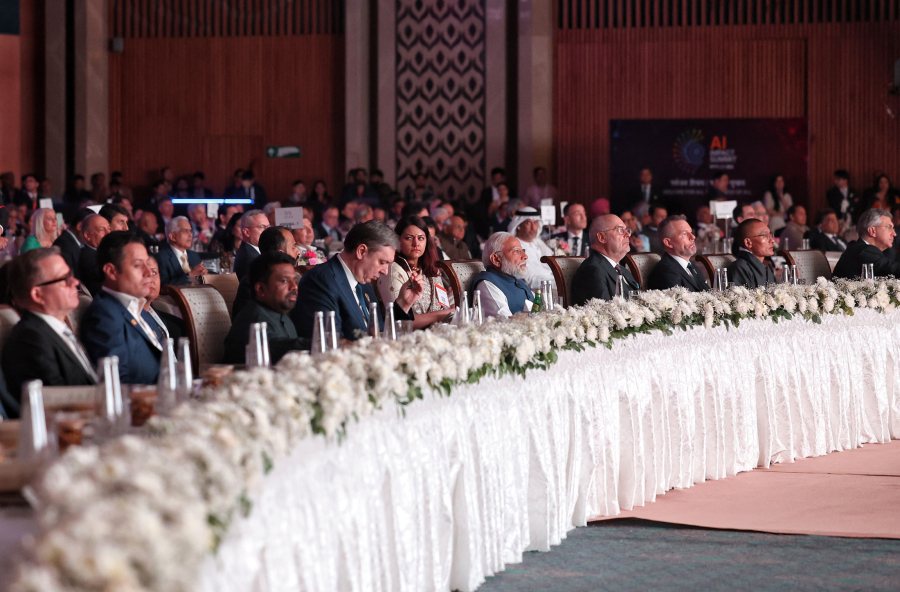
As the India AI Impact Summit 2026 concludes today in New Delhi, it marks the end of a landmark global gathering that brought together heads of state, CEOs of major technology companies, leading AI researchers, and policymakers from around the world. Among those participating in discussions connected to the Summit was SFBU’s Dr. Shalini Gopalkrishnan, who took part in a pre-Summit Inclusive AI roundtable at the Indian Consulate.
Her participation reflects a pivotal moment when AI is no longer a niche technology issue but a central economic and policy priority worldwide.
Organized under the Government of India’s IndiaAI Mission, the India AI Impact Summit 2026 was led by the Ministry of Electronics and Information Technology (MeitY). The event is positioned as one of the largest global AI gatherings to date, bringing together representatives from more than 100 countries across government, industry, academia, startups, and civil society.
The Summit’s Focus: From Vision to Implementation
With its theme — “People, Planet, and Progress” — the Summit emphasized moving AI discussions from theory to real-world implementation. The focus remained on leveraging AI for public good, sustainable development, and inclusive economic growth.
The official program centered on key priorities including safe and trusted AI, democratizing access to AI resources, building AI talent and skills, advancing research and innovation, and applying AI for measurable social impact.
India’s approach framed AI as both an opportunity and a responsibility — encouraging rapid innovation alongside governance, transparency, and accountability.
A Global Lineup of Leaders
The Summit’s global significance was reflected in its speaker lineup. India’s Prime Minister Narendra Modi delivered the inaugural address, underscoring the country’s intent to help shape global AI policy and development.
Technology leaders participating included:
- Sundar Pichai, CEO of Google and Alphabet
- Sam Altman, CEO of OpenAI
- Jensen Huang, CEO of NVIDIA
- Demis Hassabis, CEO of Google DeepMind
- Dario Amodei, CEO of Anthropic
- Bill Gates, Co-chair of the Bill & Melinda Gates Foundation
- Brad Smith, President of Microsoft
- Shantanu Narayen, CEO of Adobe
- AI research leaders such as Yann LeCun
The presence of political leadership alongside frontier AI executives highlighted the Summit’s role as a platform where policy, research, and commercial AI development intersect.
Five Days of Global Collaboration
Over five days, the Summit featured plenary sessions, policy dialogues, research showcases, startup exhibitions, and international collaboration forums. Discussions explored AI applications across healthcare, education, agriculture, climate resilience, financial inclusion, and public services.
There was a strong focus on workforce development, cross-border research collaboration, ethical standards, infrastructure access, and startup ecosystem growth.
By hosting the event at this scale, India further positioned itself as both a major AI market and an active contributor to shaping global AI standards.
Inclusive AI at the Forefront
Ahead of the main Summit sessions, an Inclusive AI roundtable at the Indian Consulate brought together women leaders from global technology companies, startups, investors, industry organizations, and nonprofits. The discussion centered on ensuring that AI development reflects diverse leadership and equitable access.
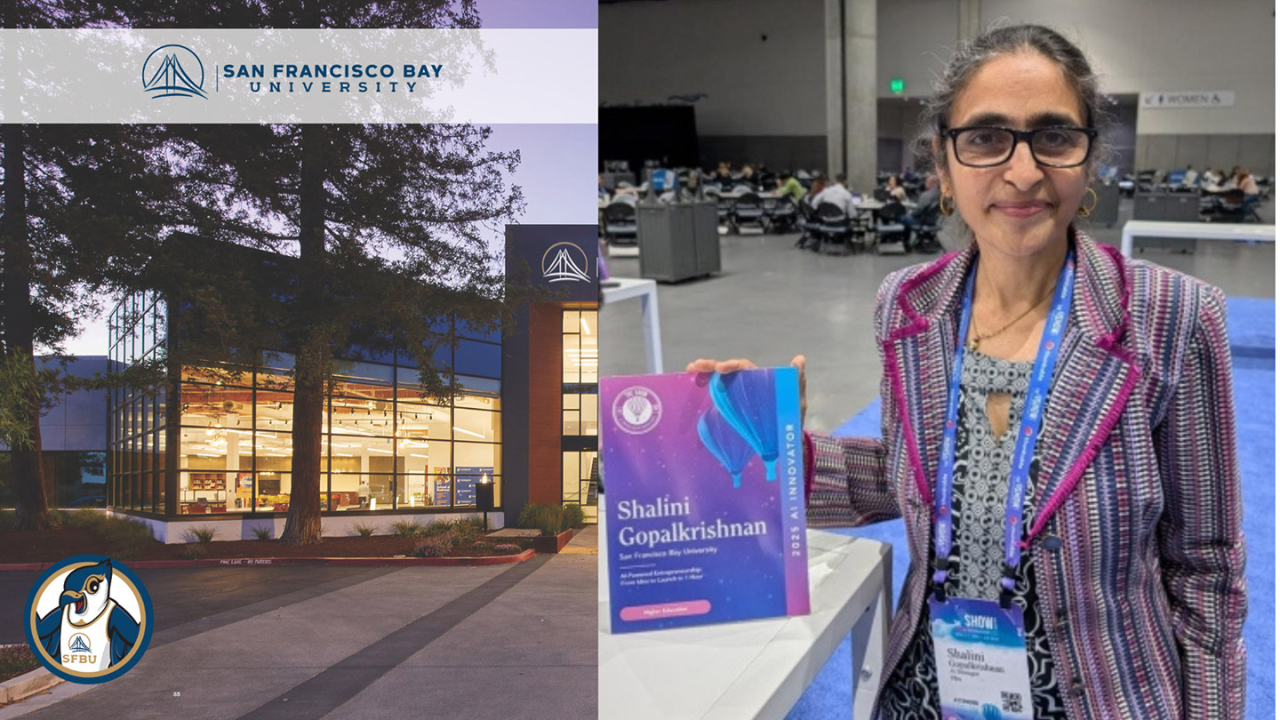
It was in this setting that SFBU’s Shalini Gopalkrishnan, DBA, joined conversations on responsible AI deployment, business transformation, and inclusive innovation.
The focus on inclusion is closely aligned with the Summit’s broader objective: ensuring AI benefits emerging markets, small businesses, and underserved communities — not only large enterprises or advanced economies.
A Defining Moment for Global AI
As the India AI Impact Summit 2026 comes to a close, it underscores a defining reality: AI now plays a central role in economic strategy, digital infrastructure, workforce transformation, and global competitiveness
By convening heads of state and leaders from Google, OpenAI, NVIDIA, DeepMind, Anthropic, Adobe, Microsoft, and beyond, the Summit reinforced that the future of AI will be shaped through coordinated global dialogue
And as those conversations conclude in New Delhi, participants — including SFBU’s Shalini Gopalkrishnan — have contributed to a broader, ongoing discussion about how AI should be developed, governed, and deployed in the years ahead.
Contact: pr@sfbu.edu